Understanding Oval Diamond Proportions for a Confident First Purchase
Why Oval Diamond Proportions Matter
Choosing an oval diamond for an engagement ring is an exciting step. The elongated shape can make the finger look longer and the diamond appear larger than its carat weight suggests. But to get this effect, you need to pay close attention to the oval diamond proportions. These proportions affect not just how the diamond looks, but also how it sparkles and how comfortable it feels on the finger.
For a first time buyer, the world of diamond measurements can feel overwhelming. Terms like length to width ratio, depth percentage, and table size are often thrown around without explanation. This article breaks down what these terms mean, why they matter, and how to use them to make a confident choice. If you are starting your search, resources like diamond-rings-info.com can help you understand how these proportions apply to real rings.
What Are Oval Diamond Proportions?
Oval diamond proportions refer to the key measurements that define the diamond's shape and cut. The most important ones are the length to width ratio, the depth percentage, and the table percentage. Each of these numbers tells you something about how the diamond will look when set in a ring.
Length to Width Ratio
The length to width ratio is the most visible proportion. It describes how long the diamond is compared to its width. A ratio of 1.30 to 1.50 is common for oval diamonds. A lower ratio, like 1.25, gives a rounder appearance. A higher ratio, like 1.60 or above, makes the diamond look more elongated and slender. The choice is personal, but knowing this range helps you narrow down what you like.
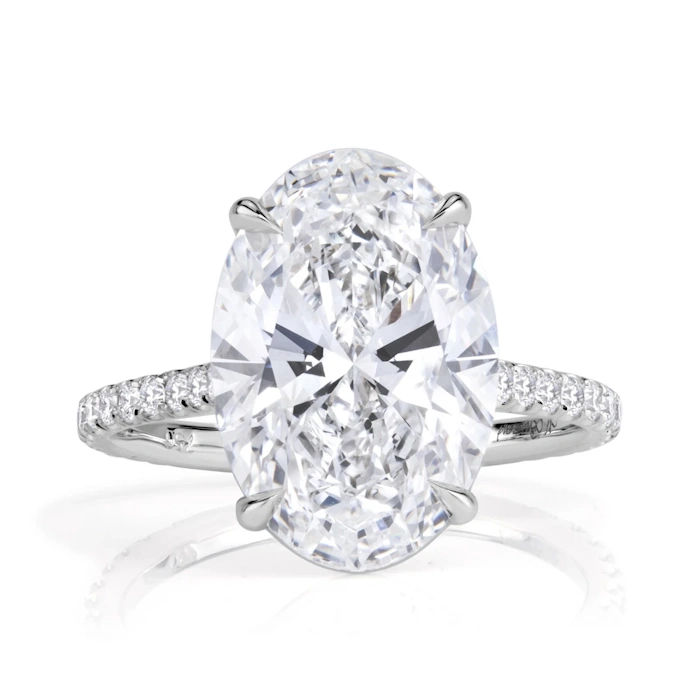
An overly elongated oval can look stretched and may not reflect light as well. A very round oval might not give you the elongation that many buyers want. Looking at diamonds with different ratios side by side helps you see the difference. The oval outline itself can also vary: some ovals have a more pointed tip at the ends, while others are softer and more rounded. The length to width ratio is the main tool for controlling that silhouette.
Depth Percentage and Table Percentage
The depth percentage is the height of the diamond divided by its width. For oval diamonds, a depth between 58% and 62% is often recommended. A diamond that is too deep can look smaller from the top and may have reduced brilliance. A diamond that is too shallow can let light leak out of the bottom, making it look dull.
The table percentage is the width of the top flat facet divided by the diamond's width. For an oval, a table between 53% and 63% is common. A larger table can make the diamond look bigger from above, but it may reduce the sparkle. A smaller table usually creates more brilliance because the facets can catch light from many angles. Finding a balance between these two numbers is key to getting a diamond that looks lively and well-proportioned.
How Proportions Affect Appearance and Fit
Proportions do more than just describe the diamond; they shape how it performs in real life. The face up size, or how large the diamond appears when viewed from above, is directly linked to the length to width ratio and the depth. A well-proportioned oval will face up close to its carat weight, meaning you get a good visual size for the money.
Finger coverage is another practical concern. A diamond with a longer length to width ratio covers more length along the finger, which can be flattering on shorter fingers. A wider ratio might suit longer fingers better. Trying on rings or looking at photos on hands similar to yours can give you a feel for what proportions work best.
The symmetry of the diamond also matters. An oval shape should be balanced: the two ends should mirror each other, and the sides should curve smoothly. Asymmetry can make the diamond look crooked when set. The facet pattern, or how the diamond's tiny facets are arranged, affects brilliance. A well-cut oval will have a distinct pattern of light and dark areas that moves as you tilt the ring. Poor proportions can make this pattern look messy or uneven.
Common Mistakes First Time Buyers Make
One common mistake is focusing only on carat weight. Two diamonds of the same carat can look very different if their proportions are not the same. A deeper diamond hides more of its weight in the bottom, so it faces up smaller. Always check the face up dimensions, not just the carat number.
Another mistake is ignoring the bow-tie effect. Many oval diamonds have a dark, bow-tie-shaped area across the center. A slight bow-tie is normal, but a very dark or wide one can ruin the look. Proportions influence how noticeable the bow-tie is. A diamond with a good length to width ratio and well-cut facets will have a softer, less distracting bow-tie. Viewing the diamond in different lighting conditions helps you see how pronounced it is.
Some buyers also overlook the importance of the oval outline. Not all ovals are the same shape. Some have a more rounded, almost cushion-like look, while others are distinctly elongated and tapered. The outline affects how the diamond sits in a setting and how it interacts with the band. When shopping, ask to see the diamond from the side as well as from the top.
Practical Tips for Evaluating Proportions
When you look at a diamond report, start with the length to width ratio. Decide what shape appeals to you. Then check the depth and table percentages to make sure they are in the recommended ranges. If possible, look at the diamond in person or through high-resolution images and videos. The way light moves across the diamond tells you a lot about its cut quality.
You can also compare the diamond's face up size to its carat weight. A well-proportioned oval of one carat should have a face up area similar to a round diamond of the same carat. If it looks noticeably smaller, the proportions might be off. Sites that help with diamond education, such as diamond-rings-info.com, often provide tools to compare these numbers across different diamonds.
Balancing Personal Taste with Technical Guidelines
While technical guidelines give you a starting point, your personal taste matters most. Some people love a very elongated oval with a high length to width ratio. Others prefer a more balanced shape. The depth and table numbers are guidelines, not strict rules. A diamond that falls slightly outside the recommended range can still be beautiful if it has good light performance and a pleasing appearance.
The key is to know what you are looking at. Once you understand oval diamond proportions, you can make decisions based on what you see, not just on what a salesperson tells you. This knowledge gives you confidence when comparing diamonds and negotiating price. You will know why one diamond costs more than another and whether that difference is worth it to you.
Final Thoughts
Buying an oval diamond is a personal journey. The proportions are not just numbers on a report; they are the blueprint for how the diamond will look and feel. By learning about length to width ratio, depth, table, and the oval outline, you equip yourself to choose a diamond that fits your style and budget. Take your time, compare several diamonds, and trust your eyes. With the right proportions, an oval diamond can be a stunning centerpiece for an engagement ring that you will love for years to come.